Tags
The syrupy exhaustion descends a little at a time, a slow slide of the dimmer switch on the world, darkness fogging your thoughts. The world seems suspended, or maybe that’s you—something’s off about your relationship to the ground. Gravity isn’t working quite right, and it’s making you dizzy, and you can’t remember what you’re scared of. You’re drenched in clammy sweat, even though that doesn’t make sense, because the droplets are running off unevenly, pooling in between the constellations of goosebumps on your skin. There’s a miserable knot in your stomach, and your limbs are filled with shifting sand. The pressure tightening around your temples has such physical weight it feels like you should be able to shake it off, but when you try the pain just clamps down harder.
It’s 1940, and you are inside your worst nightmare, and you’re afraid to even tell anyone, for fear of what they’ll do.
We hardly remember what the word means, now, but for fifty years, from the turn of the twentieth century to just past its midpoint, there was nothing in the world more instinctually terrifying than the specter of polio. More permanent than the Depression, more personal than any war, it had the power to upend lives almost overnight, transforming healthy citizens into weak, cramping phantasms, struggling for breath. Once the illness began, there was virtually no treatment, and certainly no cure. No way to know who would escape unharmed, who would be paralyzed, who might lose their life.
Polio victims left home in ambulances, and they came back transformed. Whether or not they returned in wheelchairs, supported by crutches or canes or the heavy metal leg braces that for so long functioned as cultural shorthand for the disease, they were newly burdened, weighted, in a way no one else seemed quite able to fathom. And that metamorphosis held an entire nation in terrified thrall.
Because polio changed people. And not just on the outside.
We have—and, especially, people had then—this preconceived notion that being disabled isn’t supposed to change you as a person. It seems rude, somehow, to assume that someone with significant physical challenges differs from able-bodied people in matters beyond the simply practical, and offensive to suggest that they are really other, that they see the world differently.
But they are. Different. They are different in the same way as all of us, shaped by their experiences—and those experiences, especially in the 1930s and 40s, bore little resemblance to those of the unafflicted (to use a contemporary term). They spent weeks in dark isolation wards, separated from their families, foggy from the brain infection and largely ignored by their doctors. Inpatient rehabilitation lasted months or years, sometimes in gentle kind places, sometimes in militant, miserable ones. Some endured dozens of surgeries; others were subjected to draconian therapy regimens that involved months in body casts or strapped in rigid splints. All went through unspeakable pain—physical pain, and the pain of loss, which feels no less agonizing, and hardly less concrete.
 This disease laid people bare, shaken and shattered, and even those who beat the odds to walk back into the world unencumbered had to find a way to rebuild from the trauma. Some changed for the worse; others, in the end, perhaps for the better. Who each person became depended on who they were to begin with, and how they were treated, and the people they met on their strange and sometimes devastating journey. And even at the time the public gawked like spectators at a zoo, trying desperately to wrap their heads around the horror, unable to see it the way the survivors themselves did: as everyday, dogged reality, sometimes inspiring, sometimes bleak, never predictable.
By the sixties, just a few short years after the advent of Jonas Salk’s famous vaccine, we’d forgotten any of this had ever happened.
I have written and rewritten this segment a thousand times, because I don’t want to fall prey to the reductionism you see in so many other dealings with the topic. Because I want you to hear this story the way that I do, see these people the way they really were. I want to tell you what really happened, insofar as I can find that out, not tell a story about what happened: the things that transpired here form neither a comforting narrative of triumph nor a sensationalized story of pain. It’s just a story, about people, and about those who tried to take care of them. It’s a story I think is worth remembering. Something that still informs our national attitude of determination and bravado, for better or for worse. Something I think we shouldn’t lose sight of.
But we have lost sight: of the tremendous impact of this part of our history, and the fact that it happened at all. I read an interview once, in a remarkable compilation of first-person accounts called Polio’s Legacy, in which someone recalled being asked by younger neighbors if his children were “okay;” presumably they thought that the “polio” that kept him in leg braces was hereditary, or somehow still catching.
We haven’t forgotten polio simply because we have the luxury of ignorance, or because the problem is obsolete. We forgot because we pushed it from our minds. We beat it, this terrible thing that stalked us for so many years, and so why should we acknowledge it? Why dwell on a nightmare after the waking?
It’s not accurate, exactly, to say we don’t talk about polio at all, or that people don’t think it’s important. Dozens of books have been written about it; David Oshinsky’s Polio: An American Story won a Pulitzer prize when it came out in 2005. We still talk about the disease plenty when we discuss the FDR presidency, or the ongoing vaccination debate (ask me how I feel about that sometime). But when we look back on it as a historical phenomenon, what people focus on is the race for a cure through prevention, our victory over polio, or else the sheer faceless horror of the disease. They rack up numbers of cases and children left helpless and paralyzed; they talk about the economic burden of the disease, or the hysteria it engendered. They talk about polio as a phenomenon. They talk about polio as an all-consuming fear.
They don’t talk about polio as something that happened to people. We lose track of our humanity, in those breathless chronologies, maybe because we are ignorant, or maybe because we’re afraid.
It’s not much different than it was at the time, when polio was still a scourge to be dreaded, and smiling poster children solicited donations on every corner while the survivors themselves stayed home, cast out for the unavoidable reality of their braces and canes, and the fact that they didn’t always grin. It’s easier to think about the macrocosm of war than about each individual battle. Wars can be won; it’s in the trenches that we pay the price for victory, and unless you’ve been drafted, it’s an easy fact to overlook. Behind each clinical sentence in a history book, or the bulleted list of symptoms on the Mayo Clinic web site, is, or was, a human being.
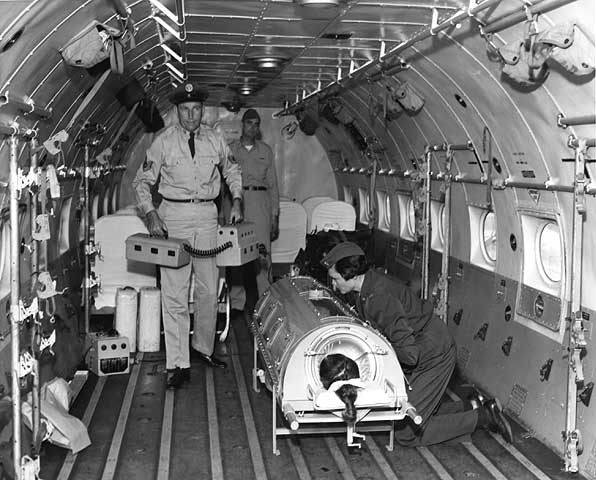
Teens and young adults were uniquely suceptible to paralysis, a pretty widely distributed fact, but the fact itself doesn’t address the sixteen-year-old who hugged her limp knees in bed, wondering if anyone would ever want to marry her, wondering if she’d ever make love. Discussions of the extreme (but ineffective) isolation measures never speak specifically of the parents who circled the outsides of hospitals until they found their child’s window, because during an epidemic a knock and a wave was as close as they could get. Knowing how much money the March of Dimes spent on splints doesn’t give us a chance to ask how they made the boy who laid for months with his arms at right angles feel. Iron lungs had children in them—children who sometimes dressed them up in Halloween costumes.
Every single time I talk about my project, this project, each time I reach out to shake a new hand, I hear another story. It pours out of people like something pressurized too long: My dad had polio, they’ll say. Or My grandmother. Their eyes go wide, and a weight lifts as they soften, like it’s good to say it, like it’s a relief to talk to someone who knows what they’re talking about. The boy down the street was in an iron lung.
I had polio, they say, sometimes, quietly. And then, always, some variation on Wow, because even—maybe especially—for the people I’d never have guessed that about, the ones who seem physically totally intact, the reminder has its own gravity. Its own power to turn back the clock.
There are plenty of things about myself I don’t usually share; some of them happened an awfully long time ago, long enough that hardly anyone knows. And every single time I get close to someone, there comes a tipping point in the conversation, a threshold where I want to say it, but I don’t, usually, because it isn’t really relevant, except in that space inside my head that begs for a voice. Just because you can’t see it doesn’t mean it didn’t change me. Just because it doesn’t “matter” to whatever we’re discussing right now doesn’t mean there isn’t some part of me that wants you to know.
I feel incredibly lucky to hear those stories from others. To be the one entrusted with them, at least for that fleeting moment. Maybe people don’t talk about it because they imagine it won’t interest anyone, or because they’re still afraid of censure, or maybe it just doesn’t occur to them, in the rush and reality of everyday life. But there is a void there. There is something left unsaid. I see it almost every day. It’s a void I don’t think anyone else is trying to fill.
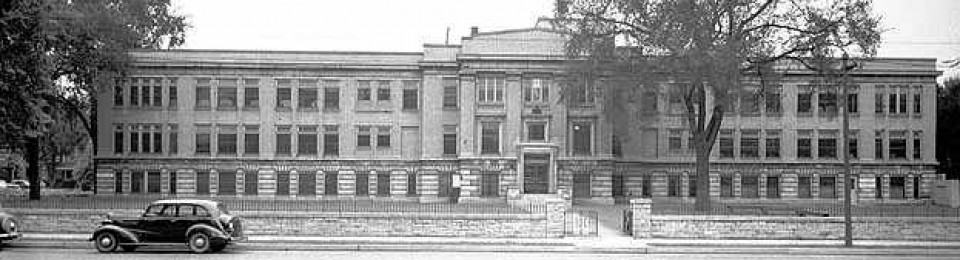
It’s a void that was filled at the time mostly by a remarkable and enigmatic woman named Elizabeth Kenny. A nurse from the rural Australian bushlands, her unique regimen of treatment for the disease not only revolutionized the field of physical therapy but changed her patients forever, in a way that entirely transcended their mobility. Conventional wisdom about polio held that paralysis was absolute, and that exercise was dangerous, with passivity the only possible source of redemption. She rejected that worldview completely, insisting that not all weakness had to be permanent, that helpless submission to the medical machine wasn’t necessarily the appropriate response to the situation, and that imperfection shouldn’t bring with it a secret shame—and her method worked beautifully. Doctors hated her. Patients loved her. And she didn’t seem much fussed either way.
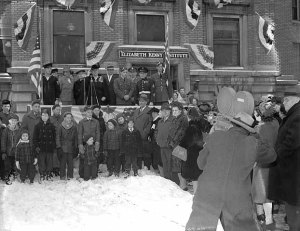
Back in 1940, when Kenny first stepped onto U.S. soil, she was entering into a society that liked its brave, idealized concept of polio survivors a lot better than it liked the real thing. The medical institution was filled to bursting with doctors who felt existentially threatened, unable to cope with their helplessness in the face of the disease. They treated their patients as collections of muscle-testing results and constellations of symptoms, because to acknowledge their humanity would mean acknowledging their suffering. And acknowledging their suffering would mean acknowledging they’d failed. So they pushed them harder, straightened their twisted limbs with ever-increasing violence, so that they could be closer to normal, and the tension could fade from the air.
For nurse Kenny the very idea of allowing those kinds of metrics to define a patient, a person, was anathema. She, too, saw the intrinsic humanity in her patients, and she wanted for them true recovery, rather than some objective standard of performance. She was more interested in how her patients felt than in how far they could or couldn’t walk. And she knew, that to ever get better—whether better meant walking unassisted, or better meant self-acceptance—honesty and wholeness, rather than some fragmented medical identity, was what was required. Her therapeutic technique was what earned her recovery rates more than twice the average of the day. But it was her therapeutic philosophy that left her patients filled with admiration rather than fear, and inner peace instead of self-reproach.
It wasn’t a person’s life you feared for when they came down with polio—it was their ability to live. And even if she couldn’t repair a broken body every time, it was in assuaging this fear that Elizabeth Kenny healed. It’s a tremendous story of persistence and triumph and hope, and a terrible one, too, of prejudice and darkness and inalterable loss. It’s a story that has more to do with the scars you can’t see than the ones that you can. And I’m in the process of writing a book about it, and her, and about the Minneapolis clinic where she did her best work—the book this site is intended to accompany.
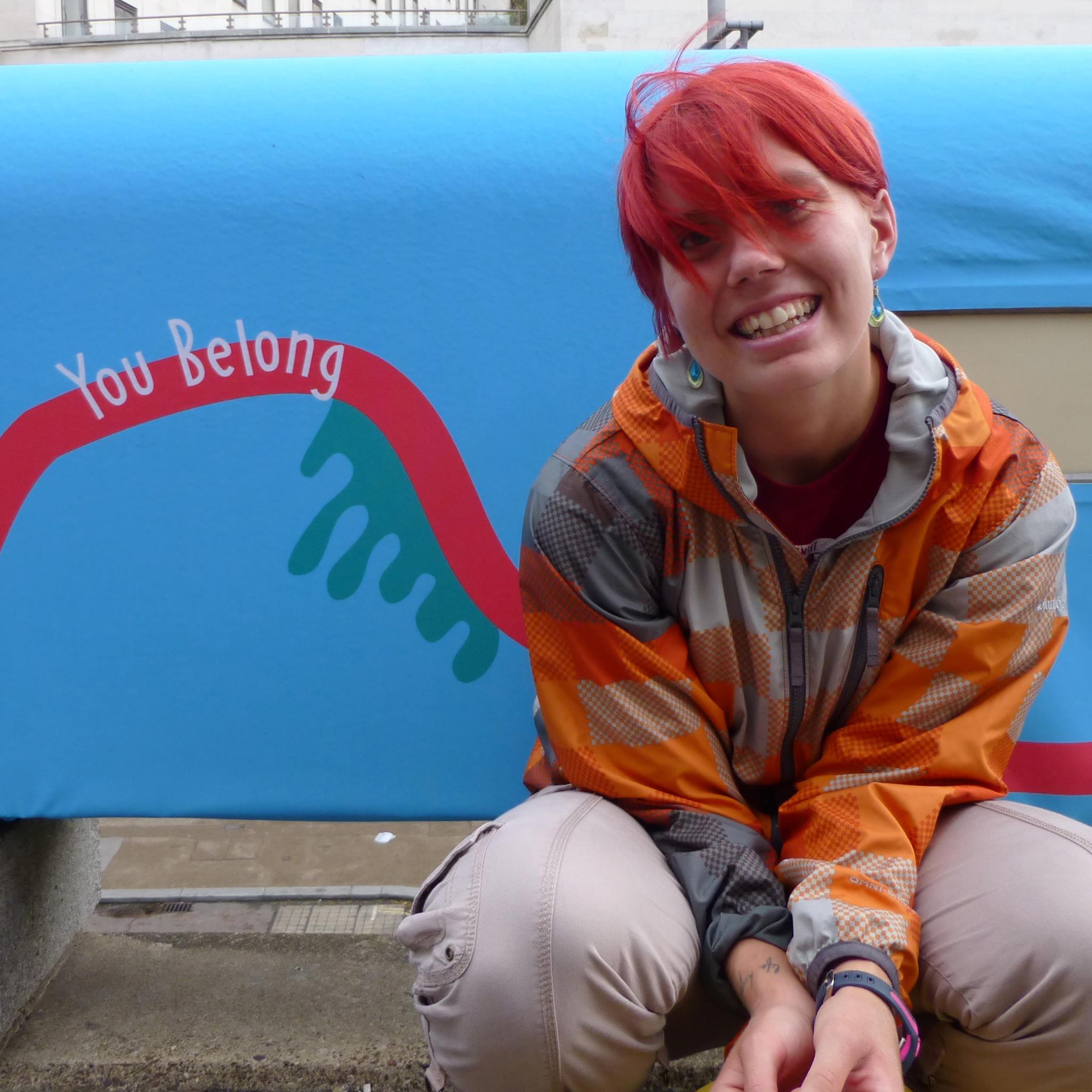
I’m not the most logical steward of this story. I’m twenty-one years old, born the year the Kenny Institute celebrated its fiftieth anniversary. I run marathons and listen to cringeworthy pop music; my laptop is grafted to me like a third limb, and my hair is sometimes dyed firetruck red. But I’ve been fascinated by this story for a long time, and I believe it desperately needs to be told. So I’m taking comfort in this: Elizabeth Kenny—almost six feet tall, self-taught, and frequently lacking in social graces—was not an especially logical hero.
I can’t wait to tell you more.
 A Louder Silence